From Plan to Execution – Your Roadmap for 12-24 Months
Strategy is great. But without a concrete action plan, it stays theory. I work with you to develop a prioritized e-commerce roadmap with quick wins, milestones, and clear ownership.
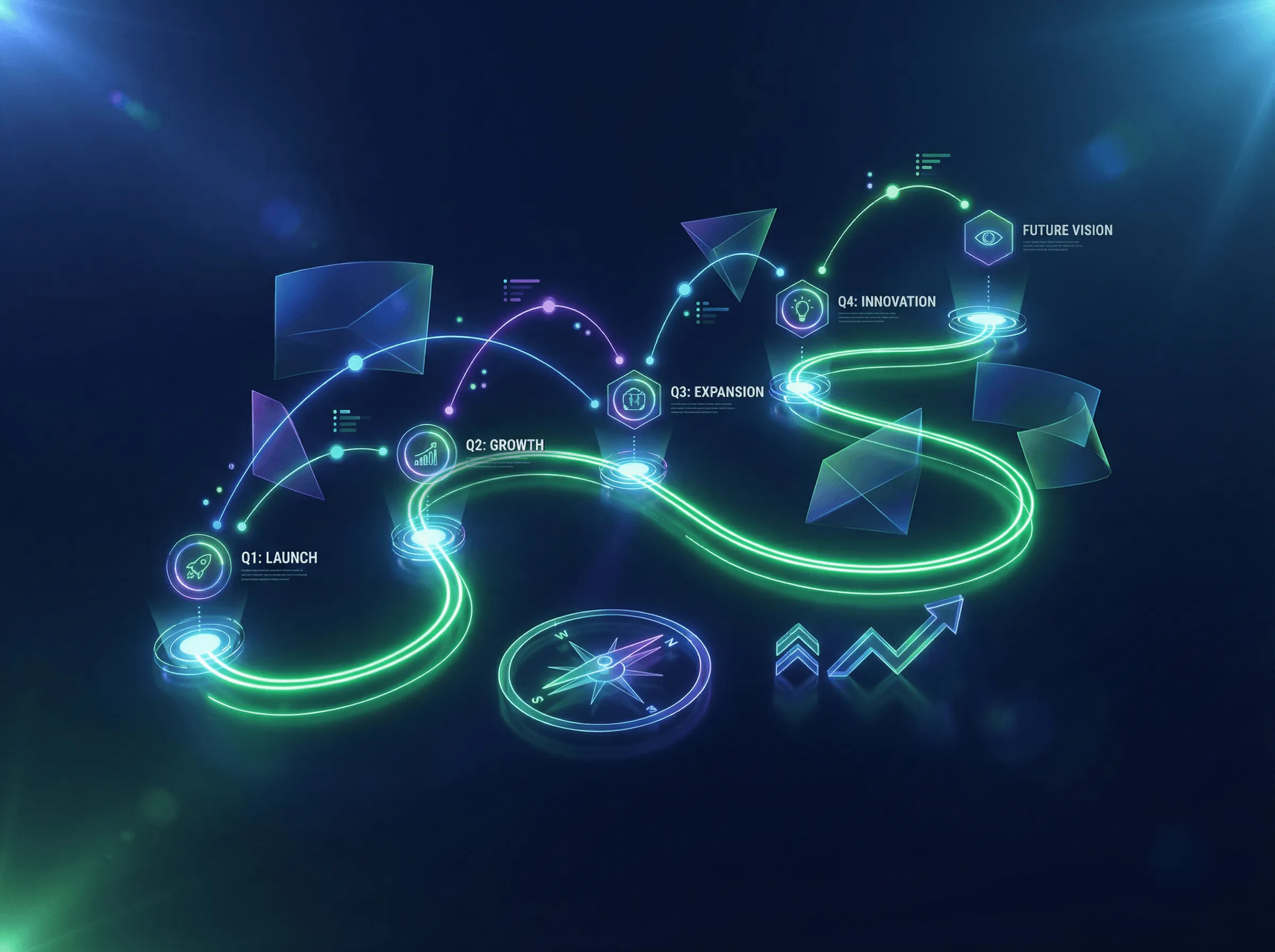
Without Roadmap vs. With Roadmap
The gap between struggling and successful online retailers often isn't strategy – it's execution power.
Without Roadmap
- Too many initiatives at once – nothing gets properly finished
- Projects run over time and budget
- Unclear priorities lead to decision paralysis
- Constant firefighting instead of strategic work
- Investments evaporate with no measurable impact
With Roadmap
- Clear priorities: what comes first, what can wait
- Realistic milestones with defined dependencies
- Quick wins deliver early success and momentum
- Measurable progress through defined KPIs
- All stakeholders aligned and on the same page
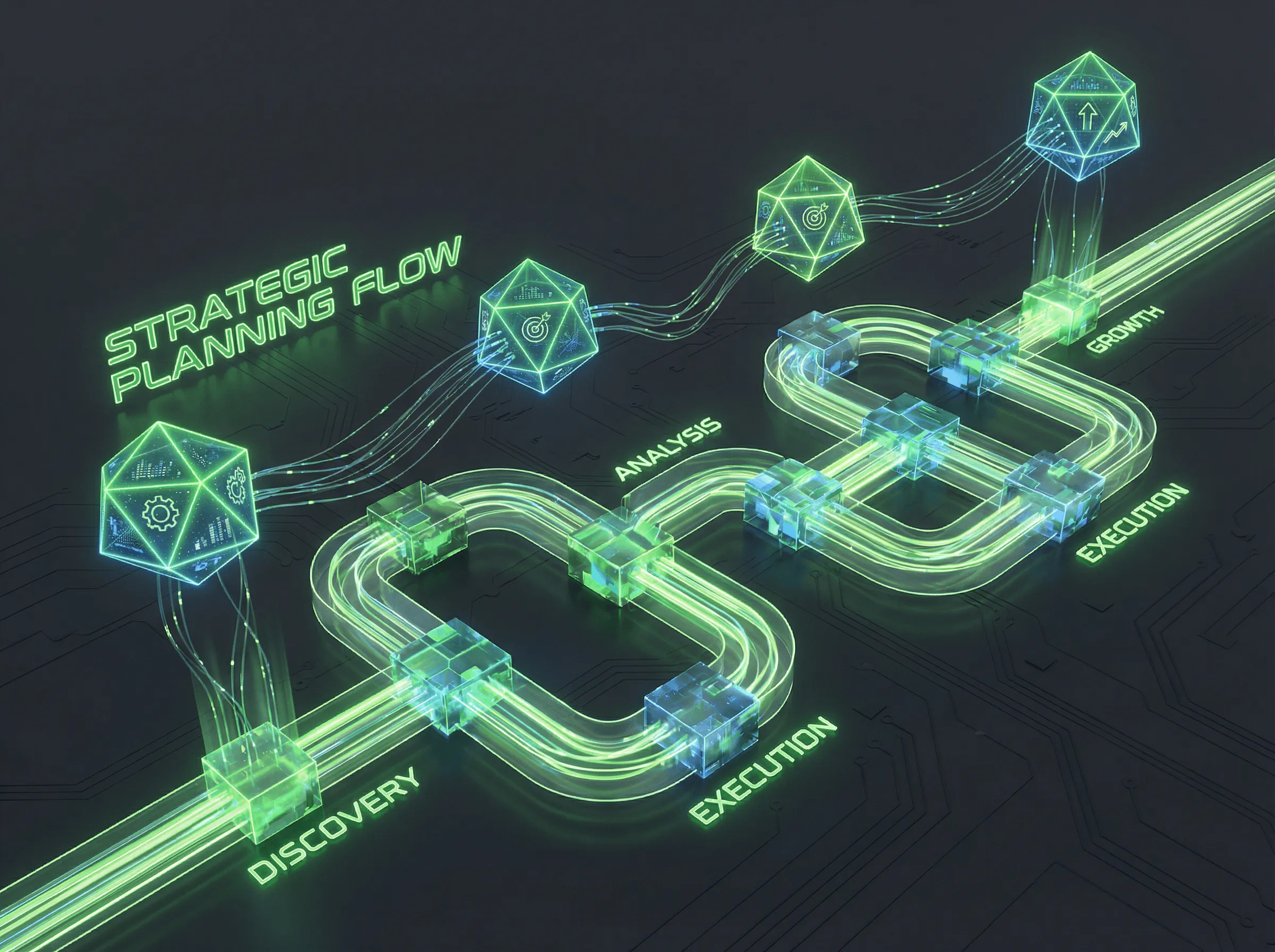
What Is an E-Commerce Roadmap?
A roadmap is your concrete action plan for the next 12-24 months – with prioritized initiatives, realistic milestones, and clear ownership.
While an e-commerce strategy defines the 'what' and 'why,' the roadmap answers the 'how' and 'when.' It translates strategic goals into concrete work packages and sequences them in a logical order.
The result isn't a rigid 5-year plan, but a living document. The roadmap provides direction without sacrificing flexibility. It gets reviewed regularly and adapted to new insights.
The Six Building Blocks of Your E-Commerce Roadmap
A solid roadmap covers all relevant dimensions – from technology to team.
Current State & Gap Assessment
Where are you today? Where do you want to be? The gap assessment reveals the distance between current and target state – making the scope of work tangible.
- Status quo analysis
- Goal definition
- Gap identification
- Impact-based prioritization
Quick Wins
High-impact initiatives you can implement immediately. Quick wins create early successes, generate momentum, and often fund the bigger projects.
- High impact, low effort
- Fast execution (< 4 weeks)
- Early wins build confidence
Technology Milestones
Store relaunch, ERP implementation, PIM integration – major technology projects with clear dependencies and realistic timelines.
- System migrations
- Integrations & APIs
- Infrastructure upgrades
Process Optimization
Automation, fulfillment, customer service – efficient processes are the backbone of a scalable e-commerce operation.
- Automation
- Fulfillment optimization
- Service processes
Marketing & Sales
Channel development, performance marketing, marketplace strategy – the roadmap defines which channels get tackled when.
- Channel strategy
- Performance targets
- Campaign planning
Team & Organization
What resources do you need? What skills are missing? The roadmap also addresses the organizational side of transformation.
- Resource planning
- Skill gap identification
- Roles & responsibilities
- Hiring & outsourcing plan
A roadmap isn't a rigid plan. It's a compass that provides direction – even when the path changes.
How Your E-Commerce Roadmap Gets Built
Four steps from status quo to prioritized implementation plan.
Discovery Workshop
Together we define your goals, analyze the current state, and identify constraints. What are the biggest levers? What's blocking progress?
Discovery Workshop
Together we define your goals, analyze the current state, and identify constraints. What are the biggest levers? What's blocking progress?
Gap Analysis & Prioritization
Using an impact-complexity matrix, we evaluate all initiatives: What delivers the most value? What's realistically achievable? What are the dependencies?
Gap Analysis & Prioritization
Using an impact-complexity matrix, we evaluate all initiatives: What delivers the most value? What's realistically achievable? What are the dependencies?
Roadmap Development
We structure initiatives into phases, define milestones, and factor in resources and dependencies. The result: your concrete action plan.
Roadmap Development
We structure initiatives into phases, define milestones, and factor in resources and dependencies. The result: your concrete action plan.
Handoff & Support
You receive your roadmap as a working document – ready for execution. If needed, I can support implementation as an <a href='/implementation-support'>implementation partner</a>.
Handoff & Support
You receive your roadmap as a working document – ready for execution. If needed, I can support implementation as an <a href='/implementation-support'>implementation partner</a>.
Two Scenarios, One Goal: Clarity
You have a successful brick-and-mortar business or B2B sales operation – and now you want to sell online. The roadmap helps you plan the transition in a structured way: Which platform fits? Which processes need to change? What's the right sequence?
Your store is running – but systems have grown organically over the years, processes are inefficient, and you don't know where to start. The roadmap brings order to chaos: What's the priority? What quick wins exist? How do you reach the next level?
- New to E-Commerce. From retail to online store – structured and without expensive detours.
- Scaling Up. From organic growth to professional e-commerce platform.
A Roadmap for 12-24 Months
Phase 1: Foundation (Months 1-3)
Lay the groundwork: implement quick wins, establish data infrastructure, and set up the team. This phase is about achieving early wins and building the foundation for larger projects.
Typical initiatives: Analytics setup, initial conversion optimizations, process documentation, team onboarding, tool evaluations.
Phase 2: Build (Months 4-9)
Execute core projects: store relaunch, ERP integration, process automation. This phase requires the most resources – but the groundwork from Phase 1 pays off.
Typical initiatives: System migration, API development, process automation, fulfillment optimization.
Phase 3: Scale (Months 10-18)
Accelerate growth: expand into new channels, prepare for internationalization, implement advanced features. The infrastructure is in place – now it's about scaling.
Typical initiatives: Marketplace integration, internationalization, performance marketing scale-up, personalization.
Phase 4: Optimize (Ongoing)
Continuous improvement: KPI monitoring, A/B testing, roadmap reviews. E-commerce isn't a project with an end date – it's an ongoing process.
Typical initiatives: Conversion optimization, customer experience improvements, process fine-tuning, roadmap updates.
Roadmap Development at a Glance
Weeks
typical project duration
Investment
for focused roadmaps
Months
planning horizon
Questions About the E-Commerce Roadmap
Still have questions? Get in touch directly.
01 What's the difference between strategy and roadmap?
A strategy defines the 'what' and 'why' – positioning, goals, business model. The roadmap translates that into the 'how' and 'when' – concrete initiatives, priorities, timelines. Ideally, the roadmap is based on a strategy. But even if you already have a clear direction, the roadmap helps with structured execution.
02 Do I need an audit first?
Not necessarily, but often helpful. An e-commerce audit provides the data foundation for solid prioritization. If you already have good visibility into strengths and weaknesses, we can jump straight into roadmap development. We'll figure out what makes sense for your situation in the initial call.
03 How detailed is the roadmap?
The roadmap is a working document, not a task-level project plan. It defines phases, milestones, and ownership – but not individual tickets. Detailed planning happens project by project. This keeps the roadmap clear and adaptable.
04 What if priorities change?
Then we adapt the roadmap. A good roadmap isn't a rigid plan – it's a living document. I recommend quarterly reviews to adjust the roadmap based on new insights. As a sparring partner, I can support you with ongoing adjustments.
05 Do you also support implementation?
Yes, if needed. The roadmap is the document – implementation support is the ongoing assistance during execution. Many clients use both: roadmap as the starting point, sparring or implementation support for the actual work.
06 What company sizes is this suitable for?
For online retailers and D2C brands with roughly €500,000+ in revenue – or companies aiming to reach that level. For very large organizations, I typically work at the department or project level rather than company-wide.
07 How does the initial call work?
The initial call is free and takes about 30 minutes. We discuss your current situation, goals, and challenges. I share initial thoughts, and we figure out whether a roadmap is the right next step. No strings attached, no hidden costs.
Ready for Your Action Plan?
Let's spend 30 minutes figuring out how a roadmap can give your e-commerce business structure and direction. Free and no strings attached.