
Acquiring a new customer costs five to seven times more than keeping an existing one. Yet most Shopify merchants stare at the same dashboard metric every day: today’s revenue. What they’re missing is the total value a customer generates across their entire relationship with the store — and that blind spot is expensive.
Customer Lifetime Value (CLV) is the metric that closes this blind spot. It doesn’t tell you what a customer buys today — it tells you what they’re worth to your business over their entire relationship with you. And it determines exactly how much you can afford to spend acquiring a new customer before you start losing money.
In this guide, I’ll walk you through how to calculate CLV in Shopify, pull the data from your existing reports, calibrate your CLV:CAC ratio, and systematically grow it with seven concrete strategies.
What Is Customer Lifetime Value?
Customer Lifetime Value (CLV) — also called LTV (Lifetime Value) — is the total gross profit a customer generates throughout their entire relationship with your business.
The key difference from other metrics: CLV doesn’t focus on a single transaction. It looks at the full customer relationship — from the first order to the last.
A concrete example:
A customer buys a coffee maker from your Shopify store for $180 in year one. In year two, they order accessories twice at $45 each. In year three, they upgrade for $220.
- Total purchases over 3 years: $490 in revenue
- At 40% gross margin: $196 CLV
- Maximum profitable acquisition cost at a 3:1 ratio: up to $65
Looking only at the first purchase, you see a $180 customer. Knowing the CLV, you see a $196 profit contributor — and you know that spending up to $65 on acquisition still keeps you profitable.
CLV isn’t just a metric — it’s a strategic decision-making tool. When you know it, you can invest aggressively in growth with confidence. When you don’t, you’re growing on gut feeling.
CLV vs. LTV — What’s the Difference?
Both terms are used interchangeably, and in practice the difference is minimal:
- CLV (Customer Lifetime Value) emphasizes the value from an individual customer perspective — what a specific customer is worth
- LTV (Lifetime Value) is more commonly used as an average — what the typical customer is worth over their lifetime
For strategically managing a Shopify store, the average (LTV) is your primary starting point. For segmentation and prioritization, you’ll want individual CLV by customer group.
How to Calculate CLV: 3 Methods for Shopify
There are several ways to calculate CLV — from a quick estimate to full predictive modeling. For most Shopify merchants, three approaches matter.
Method 1: The Simple CLV Formula
The most common and fastest method — all the data points are available directly in Shopify Analytics.
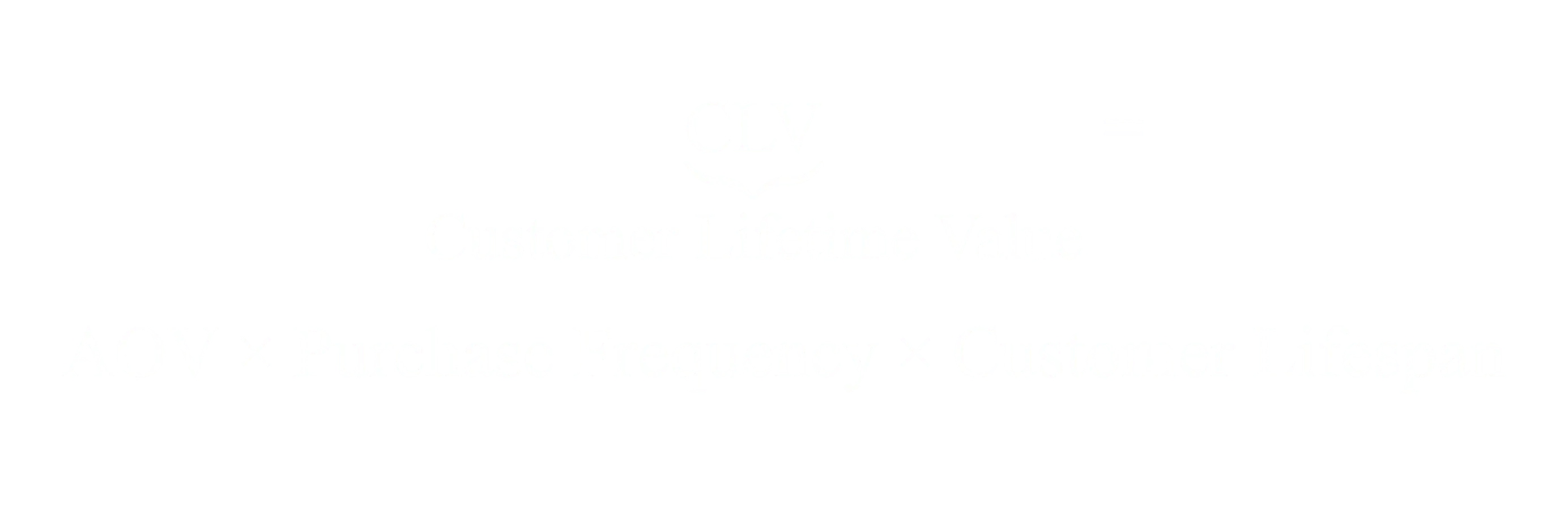

Example calculation:
- Average Order Value (AOV): $85
- Purchase Frequency: 2.5× per year
- Average Customer Lifespan: 3 years
- CLV = $85 × 2.5 × 3 = $637.50
Upside: Simple to calculate, all inputs are available in Shopify Analytics. Downside: Ignores costs — this is a revenue CLV, not a profit CLV.
Method 2: Profit-Based CLV (Recommended)
For making strategic decisions about acquisition spend, always use the profit-based CLV. It’s the only version that shows what a customer actually contributes to your bottom line.
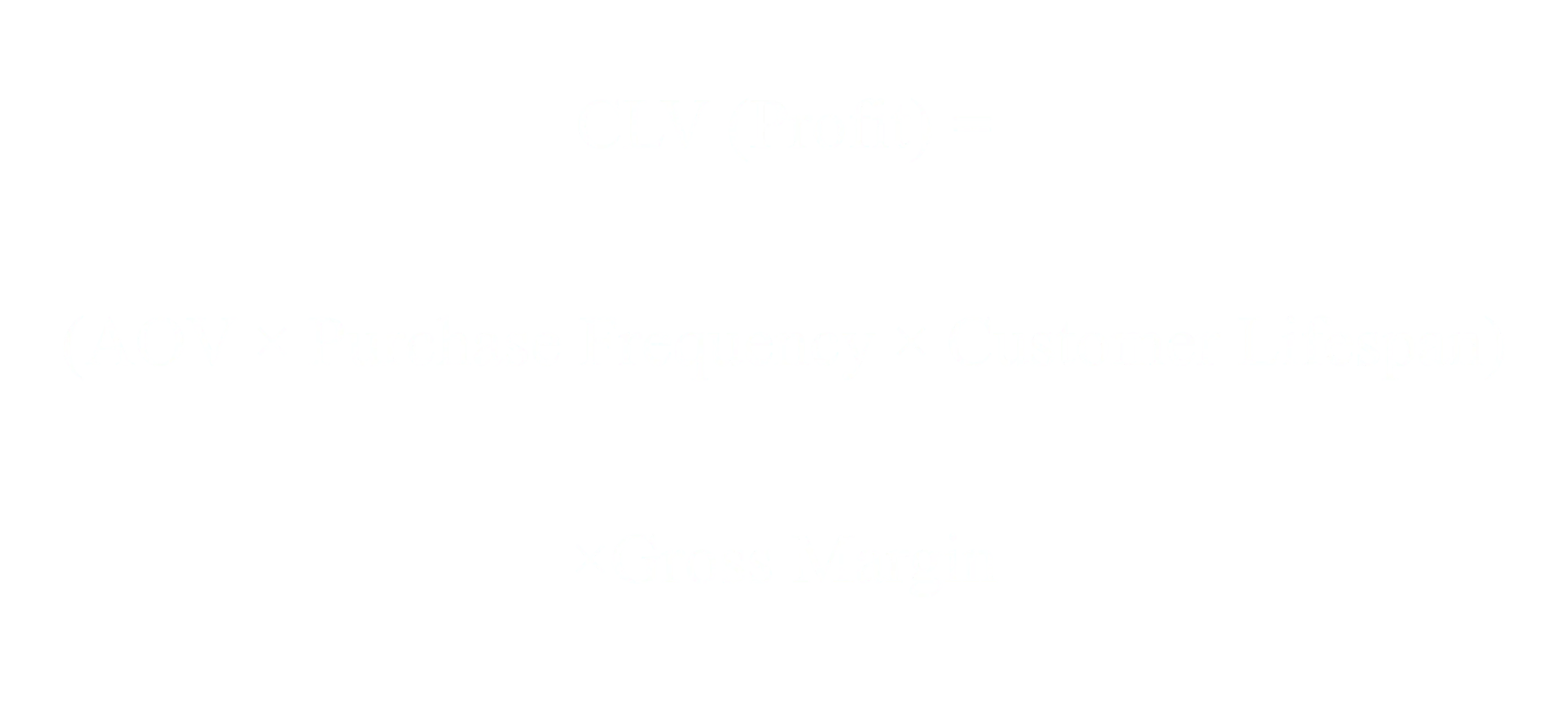

Example calculation:
- AOV: $85
- Purchase Frequency: 2.5× per year
- Customer Lifespan: 3 years
- Gross Margin: 45%
- CLV = $85 × 2.5 × 3 × 0.45 = $286.88
This is the amount that customer contributes to your profit over their lifetime — and the ceiling on profitable acquisition costs.
Method 3: Historical CLV via Cohort Analysis
The most accurate approach for stores with existing customer data. Instead of making assumptions about the future, you look at the actual purchase behavior of past customer generations.
| Step | Action | Shopify Source |
|---|---|---|
| 1 | Group all customers by their first purchase month | Analytics → Customers → First order date |
| 2 | Track total revenue per cohort over 12/24/36 months | Analytics → Reports → Sales by customer |
| 3 | Calculate average revenue per customer per cohort | Export → Excel / Google Sheets |
| 4 | Find retention rate per cohort (% of customers who repurchased) | Analytics → Returning customer rate |
| 5 | CLV = Avg. Revenue × Avg. Retention Rate × Time Period | Your own calculation |
How to Find CLV in Shopify: Step-by-Step
Shopify doesn’t display a native CLV metric — but all the data points you need are in the backend. Here’s how to derive CLV from your Shopify data.

Step 1: Find Your Average Order Value (AOV)
Path: Shopify Admin → Analytics → Dashboards
AOV is displayed directly on your main Shopify dashboard and updates daily. For a meaningful CLV calculation, look at AOV over at least 12 months — not 30 days, since seasonal swings will distort the picture.
Alternatively: Analytics → Reports → Sales over time → “Average order value” column
Step 2: Calculate Purchase Frequency
Purchase frequency is not a standard Shopify Analytics metric — you’ll need to calculate it yourself:
Purchase Frequency = Total Orders ÷ Unique Customers (same time period)
Path: Analytics → Reports → Customers → “Orders per customer” (set time range to 12 months)
Step 3: Estimate Average Customer Lifespan
Customer lifespan is the trickiest variable — you only know how long a customer stayed with you in hindsight.
Practical approximation:
Customer Lifespan = 1 ÷ (1 − Customer Retention Rate)
If 40% of your customers repurchase the following year (retention rate = 40%):
Customer Lifespan = 1 ÷ (1 − 0.4) = 1.67 years
Path for retention rate: Shopify Admin → Analytics → Returning customer rate
Step 4: Put It All Together
| Metric | Where in Shopify | Example Value |
|---|---|---|
| Average Order Value (AOV) | Analytics → Dashboard | $85 |
| Purchase Frequency (Orders/Customer/Year) | Analytics → Reports → Customers | 2.5× |
| Returning Customer Rate | Analytics → Returning customer rate | 40% |
| Customer Lifespan | Calculated: 1 ÷ (1 − 0.4) | 1.67 years |
| Gross Margin | Finance → Reports | 45% |
| CLV (Revenue) | AOV × Frequency × Lifespan | $354.88 |
| CLV (Profit) | Revenue CLV × Gross Margin | $159.69 |
Shopify Apps for Deeper CLV Analysis
For stores doing more than 500 orders per month, specialized analytics tools are worth it:
- Lifetimely: Real-time CLV calculation, cohort analysis, predictive CLV — direct Shopify integration
- Triple Whale: Combines CLV with marketing attribution, ideal for paid-heavy stores
- RetentionX: Focused on CLV forecasting and customer segmentation with machine learning
CLV:CAC Ratio — The Critical Relationship
Knowing your CLV alone isn’t enough. The real strategic lever is the ratio between CLV and your Customer Acquisition Cost (CAC).
What’s a Good CLV:CAC Ratio?
| Ratio | What It Means | Action Required |
|---|---|---|
| Below 1:1 | Every new customer costs more than they're worth | Immediate action needed — growth is destroying capital |
| 1:1 to 2:1 | Barely any room for sustainable growth | Increase CLV or reduce CAC |
| 3:1 | Industry standard — healthy ratio | Growth is scalable and profitable |
| 4:1 to 5:1 | Strong position — room to accelerate growth | Increase acquisition spend |
| Above 5:1 | Possibly under-investing in acquisition | You're leaving growth on the table |
How to Calculate CAC: What Does a New Customer Actually Cost?
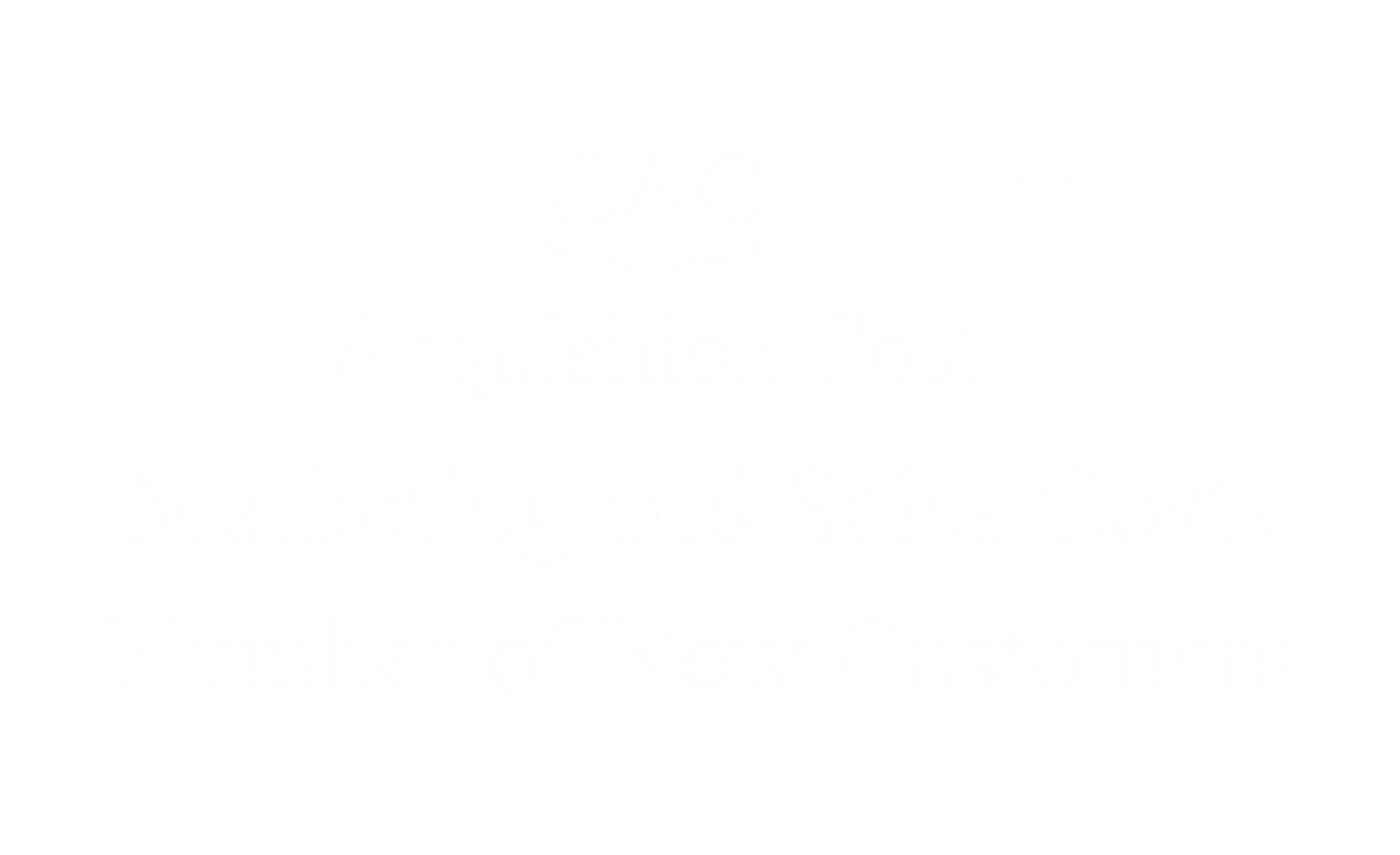
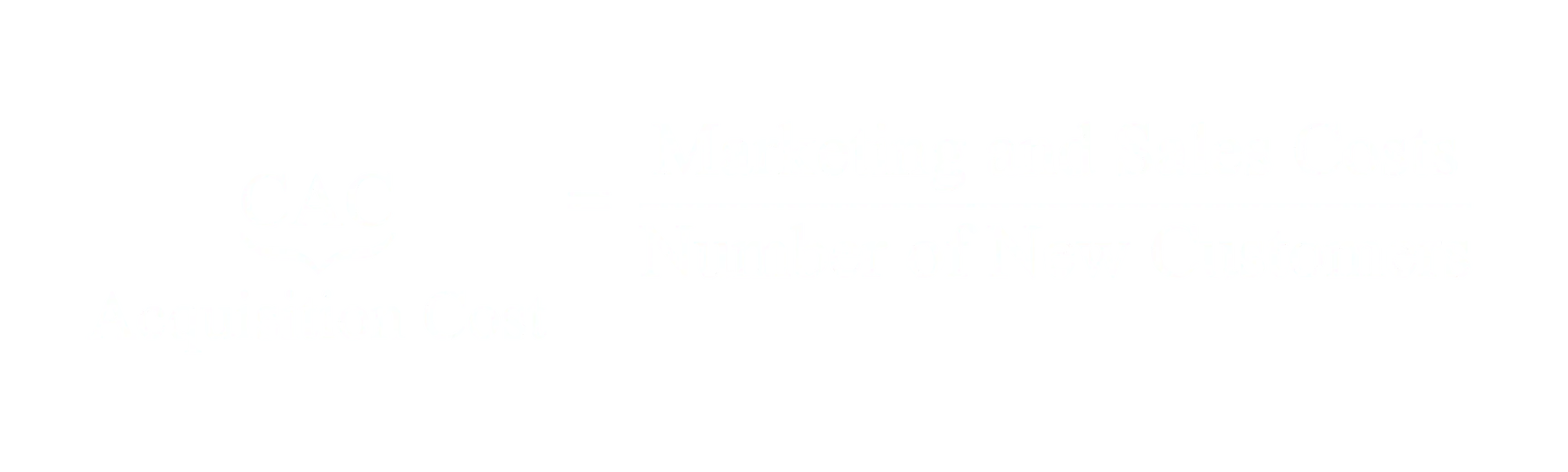
Example:
- Monthly marketing spend: $8,000 (Google Ads, Meta, email tool, agency)
- New customers that month: 120
- CAC = $8,000 ÷ 120 = $66.67
With a profit-based CLV of $287, that’s a CLV:CAC ratio of 4.3:1 — a solid foundation for scalable growth.
CLV:CAC as a Strategic Growth Framework
The CLV:CAC ratio answers the most important growth question: Can I put more money into acquisition to grow faster?
- Ratio above 4:1: Yes — you’re leaving growth on the table, increase budget
- Ratio at 3:1: Hold — healthy balance, keep optimizing
- Ratio below 3:1: No — raise CLV or lower CAC first, then scale
7 Strategies to Increase CLV in Shopify
Knowing your CLV is step one — systematically growing it is step two. CLV has three mathematical levers: order value, purchase frequency, and customer retention. All three can be directly optimized.
1. Email Marketing: The Most Profitable Retention Channel
Email is the single most important CLV growth channel for Shopify stores — with an average ROI of 42:1, nothing else comes close.
The most important CLV-focused flows:
- Welcome Flow (after first purchase): Brand introduction, cross-sell first complementary products, goal: drive a second purchase within 60 days
- Winback Flow (after 90–120 days of inactivity): Re-engage customers before they’re gone for good
- Post-Purchase Flow (after every order): Explain product usage, collect reviews, set up the next purchase opportunity
- VIP Flow (for high-CLV customers): Exclusive offers and early access for top customers — loyalty through status
2. Loyalty Programs
Loyalty programs directly increase both purchase frequency and customer retention — two of the three CLV levers at once.
What makes loyalty programs work:
- Points on purchases: Every order earns points → incentive to come back
- Tier system: Bronze/Silver/Gold creates status incentives and raises the switching cost
- Points for non-purchase actions: Reviews, social sharing, birthdays — engagement beyond buying
- Exclusive member perks: Early access, members-only products
Shopify apps: Smile.io, LoyaltyLion, Yotpo Loyalty
3. Upselling and Cross-Selling: Grow AOV and CLV Simultaneously
Upselling (higher-priced product) and cross-selling (complementary product) increase AOV — which directly increases CLV.
Native Shopify options:
- Product recommendations on product pages (via Shopify Product Recommendations API)
- “Frequently Bought Together” in the cart
- Post-purchase upsells with apps like ReConvert or Zipify
| Tactic | Avg. AOV Lift | Implementation | Best For |
|---|---|---|---|
| Post-Purchase Upsell | +15–25% | App (ReConvert, Zipify) | Stores with complementary products |
| Frequently Bought Together | +10–15% | App or native | Stores with related assortments |
| Volume Discounts (3 for 2) | +20–35% | Discount app or Shopify Functions | Consumable products |
| Bundle Offers | +15–30% | Manual or app | Thematically related products |
| Free Shipping Threshold | +5–10% | Native in Shopify | Universally recommended |
4. Subscriptions: The Strongest CLV Multiplier
Subscriptions are the single most powerful tool for CLV growth — they guarantee repeat purchases without requiring the customer to actively come back.
Why subscriptions transform CLV:
- Purchase frequency jumps from 2–3× per year to 12× (monthly subscription)
- Churn becomes predictable and measurable
- CLV becomes forecastable — critical for acquisition investment decisions
Shopify subscription apps:
- Shopify Subscriptions (free, native): Perfect for simple subscription products
- Recharge: More powerful, with full customer-facing subscription management
- Bold Subscriptions: Extensive customization options
Which products work for subscriptions: Consumables (coffee, beauty, pet food, supplements), regularly-needed services, products with a natural consumption rhythm.
5. Personalization: Relevance as a Retention Driver
Customers who feel understood stay longer. Personalization increases the relevance of every communication — and with it, the likelihood of repurchase.
Personalization layers in Shopify:
- Product recommendations based on purchase history (Shopify API or Klaviyo AI)
- Dynamic emails with personalized products based on segment membership
- Segmented offers — VIP customers see different deals than first-time buyers
- Customized homepage — different product ordering for returning customers (via Liquid + cookies)
6. Exceptional Customer Service: The Underrated CLV Driver
Every negatively resolved complaint costs you CLV. Every positively resolved one builds stronger loyalty than a frictionless experience ever could.
Research shows: customers whose problem was resolved quickly and generously have a higher retention rate than customers who never had a problem at all. A well-handled exception builds deeper trust than a smooth experience with no friction.
What this means operationally:
- Accessibility: Live chat (Tidio, Gorgias), fast email response times (under 4 hours)
- Generous return policy: A liberal return policy reduces purchase friction and increases repurchase rates
- Proactive communication: Tell customers about shipping delays before they have to ask
7. Retention Campaigns: Prevent Churn Before It Happens
Before a customer churns, there are always warning signals — declining open rates, longer purchase gaps, no response. Retention campaigns address these signals systematically.
Win-Back Sequence for Shopify:
| Timing | Action | Goal |
|---|---|---|
| 45 days without purchase | Personalized reminder with relevant product | Trigger repurchase impulse |
| 75 days without purchase | Incentive: exclusive offer or free shipping | Lower the purchase barrier |
| 120 days without purchase | ”We miss you” email with clear CTA | Last attempt before churn |
| 180 days without purchase | Remove from active segment | List hygiene — cut inactive contacts |
CLV Segmentation: Who Are Your Most Valuable Customers?
Not all customers are equally valuable — and a one-size-fits-all strategy leaves money on the table. CLV segmentation divides your customer base into groups that each deserve a different approach.
The RFM Model: Recency, Frequency, Monetary
The RFM model is the most proven framework for CLV segmentation in e-commerce. It evaluates every customer across three dimensions:
| Dimension | What It Measures | Shopify Data Source | High Score Means |
|---|---|---|---|
| Recency (R) | How long since last purchase? | Analytics → Customer reports → Last order | Recently purchased → active customer |
| Frequency (F) | How often has the customer bought? | Analytics → Orders per customer | Many purchases → loyal customer |
| Monetary (M) | How much has the customer spent? | Analytics → Total spend per customer | High spend → high-value customer |
Four key RFM segments and their strategies:
-
Champions (high R, high F, high M): Your best customers — bought recently, buy often, spend a lot. Strategy: exclusive VIP treatment, early product access, top-tier loyalty program.
-
Loyal Customers (mid R, high F, mid M): Regular buyers, but not your highest order values. Strategy: AOV growth through upsells, pathway to Champion tier.
-
At-Risk Customers (low R, high F, high M): Previously valuable customers who’ve stopped buying. Strategy: personalized win-back campaign — the ROI opportunity is highest here.
-
New Customers (high R, low F, low M): First order was recent. Strategy: immediate welcome flow, trigger second purchase within 60 days.
CLV Limitations: What the Metric Can’t Tell You
CLV is powerful — but it’s a model, not a crystal ball. These limitations are worth knowing.
1. It’s built on historical data Historical CLV is based on how past customers behaved. If you change your product assortment, pricing, or target audience, historical CLV numbers may not transfer.
2. External factors Market shifts, new competitors, economic downturns — CLV can’t predict how external forces will affect purchasing behavior.
3. Averages hide outliers A CLV of $250 could come from two very different groups: many customers each spending $250 once, or a few customers with multiple purchases. The strategic implications are fundamentally different.
4. Attribution across multi-channel stores If a customer buys in your Shopify store, on Amazon, and in a physical location, your Shopify CLV is only a fragment of their true customer value.
Frequently Asked Questions About CLV in Shopify
What's a good CLV for a Shopify store?
It depends heavily on your industry, price point, and product category. As a rule of thumb: a healthy CLV should be at least 3× your CAC. Fashion stores typically see CLVs of $200–$400, while premium niches run significantly higher.
How quickly can I grow my CLV?
You’ll see early measurable improvements from email retention campaigns within 30–60 days. Loyalty programs show traction after 90 days. But you need 6–12 months to measure meaningful CLV impact — CLV changes take time to show up in customer behavior.
Does CLV differ by acquisition channel?
Significantly. Customers from organic search or referrals typically have a 20–40% higher CLV than paid channel customers — because they come in with stronger purchase intent. That’s a powerful argument for investing in SEO and referral marketing.
Can I see CLV directly in Shopify?
No, Shopify doesn’t display a native CLV figure. You can calculate it from existing metrics (AOV, purchase frequency, returning customer rate) or use specialized apps like Lifetimely.
How much data do I need before CLV analysis is meaningful?
Around 500 completed orders gives you enough data for a meaningful CLV calculation. Smaller stores should use the simple formula. Cohort analysis and RFM segmentation become actionable around 2,000–3,000 customers.
How often should I recalculate my CLV?
At minimum every quarter — and any time you make significant changes: new product categories, revised pricing, new acquisition channels. CLV isn’t a set-it-and-forget-it calculation. It’s a living strategic metric. Stores that only recalculate CLV once a year are making decisions on stale data.
How does a high return rate affect CLV?
Significantly. Returns reduce effective revenue and — more importantly — gross margin, both of which are direct CLV inputs. If you have a 20% return rate and ignore it in your CLV calculation, you’re systematically overestimating customer value. Factor returns into your margin calculation, not as a footnote.
When is a customer considered churned?
It depends on your product type. A reliable rule of thumb: if a customer has been inactive for twice your average repurchase interval, they’re likely churned. For a store with a 60-day average repurchase cycle, a customer is at-risk after 120 days of silence — not after a full year.
Should I actively market to low-CLV customers?
Depends on the root cause. Low purchase frequency → run a retention campaign. Low AOV → test an upsell strategy. High return rate → investigate product quality or expectation-setting. Customers with persistently low CLV and high service costs can be strategically excluded from paid marketing — it actually improves overall profitability.
Does discounting hurt CLV in the long run?
Yes, if overused. Short-term, discounts boost revenue. Long-term, they can damage CLV. Customers who only buy on discount have lower margins, higher price sensitivity, and weaker brand loyalty. The real risk: you train customers to wait for deals. Use discounts deliberately — as an acquisition tool for new customers or a last-resort win-back mechanism, never as a default strategy.
What's the difference between CLV and CLTV?
Nothing — both abbreviations refer to the exact same concept. CLTV is sometimes used as a more precise spelling to distinguish it from the generic LTV. In practice, CLV, LTV, and CLTV are used interchangeably across the industry.
Bottom Line: CLV as the Compass for Sustainable Shopify Growth
Customer Lifetime Value isn’t just one metric among many — it’s the strategic map for your growth decisions. It tells you exactly how much a customer is actually worth, how much you can invest in acquisition, and where your biggest levers for profitable growth are hiding.
For more on the key Shopify metrics you should be tracking alongside CLV, check out our complete e-commerce KPI guide.
Your four-step action plan:
- This week: Calculate your CLV and CAC from Shopify Analytics (simple formula) — takes about 30 minutes
- Week 2: Assess your CLV:CAC ratio and identify your #1 priority action
- Month 1: Optimize one email flow that directly impacts CLV (welcome flow or win-back)
- Quarter 1: Run an RFM segmentation and build a VIP strategy for your Champions segment
The best time to start optimizing for CLV was yesterday. The second best time is right now.