Most mistakes in e-commerce platform selection happen not because one system is objectively worse. They happen because the wrong question is asked.
“Which e-commerce platform is the best?” is the wrong question. The right one is: “Which shop software fits my processes in 24 months, my team, my budget, and my system landscape?” This sounds like a minor semantic shift. In practice, it determines whether you migrate your shop system in three years or grow with it.
I advise DACH shops on this decision without a partnership with any of the vendors. No Shopify badge. No Shopware certificate. Operational experience from projects where the platform choice was made right and wrong, with the respective consequences in both cases.
What Is an E-Commerce Platform?
An e-commerce platform, also called a shop system or online shop system, is the technical foundation on which an online business is built. It controls the product catalog, checkout process, payment processing, inventory management, customer communication, and integration with external systems like ERP, CRM, and marketplaces.
What distinguishes a full e-commerce platform from a simple online store or website builder is the depth of commerce functionality:
- Product management: structured attributes, variants, bundles, digital products
- Pricing logic: customer groups, quantity discounts, currencies, tax rules
- Order management: fulfillment workflows, returns, partial shipments
- Customer management: accounts, purchase history, segmentation, GDPR tools
- System integration: API connections to ERP, PIM, CRM, warehouse management
- Scaling: traffic peaks, multichannel, internationalization
Types of E-Commerce Platforms
The e-commerce software market divides into three fundamental architecture approaches:
SaaS platforms like Shopify, BigCommerce, or Wix eCommerce: you rent the platform. Hosting, infrastructure, and security updates are included. Low entry barrier, predictable costs, limited deep customization.
Open-source and self-hosted systems like WooCommerce, Shopware Community Edition, and Magento Open Source: you install the software on your own infrastructure. Full control, but also full responsibility for operations, security, and scaling.
Headless and composable platforms like Shopify Headless (Hydrogen), Shopware Headless, or Spryker: frontend and backend are decoupled. Maximum flexibility for organizations with their own development teams and specific UX requirements.
The full system comparison of Shopify, Shopware, WooCommerce, and Magento with strengths, weaknesses, and plan costs is in the Ecommerce Platform Comparison 2026.
SaaS, Open Source, or Headless: The Architecture Pre-Question
Before evaluating individual e-commerce platforms, answer a prior question: which operating model fits your organization?
SaaS: Fast Start, Predictable Costs
SaaS e-commerce solutions are suited for D2C brands, growing B2C merchants, and businesses without their own development team. The provider handles infrastructure. You pay monthly and focus on your business.
The limit: you have no full control over code and infrastructure. Certain customizations are not possible or only achievable via apps. Most DACH shops below €5M GMV can live with this limit comfortably.
Open Source: Control at a Price
Self-hosted shop systems fit organizations with their own development team, complex individual requirements, or regulatory requirements around data location. Full control over code, data, and infrastructure.
The catch: hosting, maintenance, security updates, and scaling are your responsibility. These costs do not appear in license pricing but add up significantly. Many merchants underestimate this in their initial TCO calculation.
Headless: Flexibility for Complex Requirements
8 Criteria for E-Commerce Platform Selection
These eight criteria should be answerable before you take the first demo appointment. Whoever buys an e-commerce solution without working through these questions structurally is making the decision based on marketing, not requirements.
Criterion 1: Operating Model and Data Control
The first question is not “Shopify or Shopware?” but: do you want or need to keep data on your own servers?
Clarify in advance:
- Are there regulatory requirements around data location (government, financial services, healthcare)?
- Do you have a team that can independently operate hosting, infrastructure, and security updates?
- Is data sovereignty on DACH servers a hard requirement or a preference?
If all three questions are answered with no, a SaaS e-commerce solution is the right direction. If data sovereignty on German servers is a hard requirement, only open-source shop systems on DACH hosting qualify.
Criterion 2: Technical Maturity of Your Team
An e-commerce platform that requires developers for every daily process is a permanent cost trap for organizations without a strong IT team. The relevant question is not whether a system is technically demanding, but whether your merchant team can work in daily operations without developer support.
Shopify is built so that teams without coding knowledge can manage products, create campaigns, configure discounts, and analyze reports. WooCommerce and Shopware require considerably more technical grounding for configuration, updates, and plugin management.
Three questions that reveal more than any demo: Can your marketing team independently create landing pages? Who manages plugin updates, and is there a dedicated developer for this? How quickly can you currently launch a discount campaign?
Criterion 3: Business Model, B2B or B2C
This is the factor most frequently misjudged. Shopify is optimized for B2C and D2C. B2B features like individual customer price lists, approval workflows, quote creation, and credit limits are only available in meaningful scope on Shopify from the Plus plan onward.
Shopware has B2B features anchored deep in the platform architecture, not as an afterthought. Merchants who primarily operate B2C today but plan to build B2B volume in the medium term should factor this into the platform decision now, not in three years.
The question that must be answered before any e-commerce platform decision: what will your B2B share be in 24 months? A shop that is 100% B2C today and builds 40% B2B volume tomorrow regrets an early Shopify decision. More guidance for hybrid models is in the B2B Shop System Comparison.
Criterion 4: Multichannel and Marketplace Integration
Are you operating only your own e-commerce shop today, or do you plan marketplaces like Amazon, eBay, OTTO, or Kaufland? Every platform needs clean inventory synchronization, product data mapping, and order processing for multichannel operations.
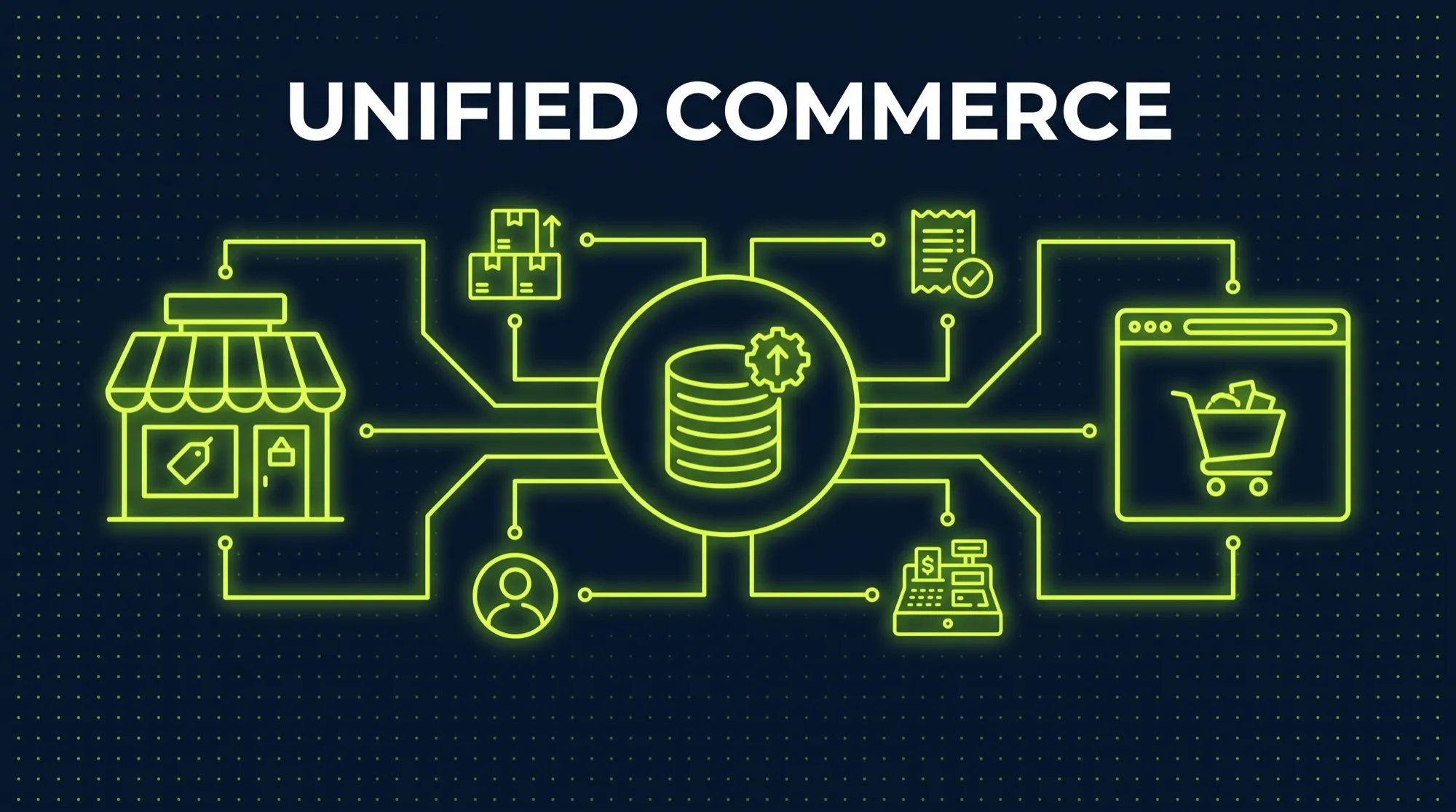
Shopify offers a broad app ecosystem for multichannel e-commerce solutions. JTL as middleware solves the requirements for many DACH merchants on WooCommerce or Shopware. Connecting an ERP to Shopify makes multichannel synchronization considerably more robust than any app solution alone.
The questions to answer before any vendor conversation: On which marketplaces are you active today, or planning to be? Who manages product data, and do you have a PIM system? How many order sources should consolidate into one system?
Criterion 5: SEO and Content Strategy
Which shop system is “best for SEO” is often answered incorrectly. The truth: SEO results depend more on content strategy, page structure, and backlink profile than on the shop system. All leading e-commerce platforms are sufficiently configurable for good SEO.
The relevant differences for DACH merchants:
- Loading speed: Shopify is CDN-optimized and delivers consistently fast loading times without infrastructure work. With self-hosted systems, speed depends heavily on the hosting environment.
- URL structure: Shopware offers more flexibility in URL architecture. Shopify has some fixed URL patterns that can constrain very specific SEO requirements.
- Content management: how easily editors can manage blog articles, landing pages, and category texts without developers is the most underestimated SEO factor. What role topical authority plays for sustainable e-commerce SEO is described in the article on Topical Authority in E-Commerce SEO 2026.
Criterion 6: ERP and System Integration
Which ERP, which CRM, which PIM needs to be connected? This question often decides the right e-commerce platform more strongly than any other criterion.
Shopify offers direct connections to Microsoft Dynamics, Oracle NetSuite, and SAP through the Global ERP Program. JTL and Xentral are the DACH standards for mid-market shops. Shopware enables deeper individual integrations through its open-source architecture, but requires more development effort.
ERP integration is not a secondary point in platform selection. It determines operational efficiency, data consistency, and the ability to reliably track e-commerce metrics like inventory turnover, contribution margin, and customer lifetime value.
Criterion 7: Total Cost of Ownership over 36 Months
The cheapest shop system is rarely the cheapest in operation. The cheapest system is the one that fits your infrastructure and your team.
Always calculate:
TCO 36 months =
  License / plan costs × 36
  + hosting (if self-hosted)
  + implementation costs (one-time)
  + plugin / app costs × 36
  + ongoing development costs
  - saved manual costs
WooCommerce is free as a plugin. But hosting, maintenance, security updates, plugin licenses, and developer hours add up for a professionally operated shop to a multiple of Shopify plan costs. This is not the exception, it is the rule.
Reference values for a DACH shop with €1.5M annual revenue over 36 months:
| Position | Shopify (Shopify Plan) | Shopware (Community + Hosting) |
|---|---|---|
| License / Plan | ~€3,780 | €0 |
| Hosting | included | €3,600–7,200 |
| Implementation | Depends on scope and complexity | Depends on scope and complexity, typically higher than Shopify |
| Apps / Plugins | €3,600–7,200 | €2,400–6,000 |
| Ongoing development | Depends on team setup and change frequency | Depends on team setup and change frequency, typically higher than Shopify |
| TCO estimate | License, hosting, and apps as a baseline, plus project-specific implementation and development effort | License, hosting, and apps as a baseline, plus project-specific implementation and development effort, typically the higher-TCO option overall |
These are reference values, not guarantees. Your specific TCO depends on complexity, team, and requirements, get a free audit for numbers that apply to your situation. What they show: the apparently free e-commerce solution is often the more expensive option.
Criterion 8: AI Readiness and Agentic Commerce
This is not a future criterion. It is a present-day criterion for 2026.
Since 2025, ChatGPT users can shop directly within the AI interface. Shopify merchants are reachable via native ChatGPT Catalog integration. Merchants running Shopify with well-structured product data can appear in ChatGPT purchase recommendations. Shopware launched an “Agentic Commerce” sales channel in April 2026 with version 6.7.9, enabling comparable functionality for Shopware shops.
For WooCommerce and Magento, there is currently no comparable native integration.
DACH-Specific Requirements for E-Commerce Platforms
Many international shop system comparisons ignore what matters in the German market. DACH merchants have specific legal and market requirements that not all e-commerce solutions address equally.
Payment Methods: What Is Standard in the German Market
“Invoice purchase” (Kauf auf Rechnung) is Germany’s most used payment method for first online purchases. An e-commerce platform that does not handle this natively or via established integrations loses conversion.
Relevant payment methods for DACH e-commerce:
- Invoice purchase (via Klarna, PayPal Pay Later, Unzer, own invoicing)
- SEPA direct debit
- Sofortüberweisung (Klarna Sofort)
- PayPal (market leader in checkout abandonment recovery in Germany)
- Credit card (growing relevance, especially B2B)
- Apple Pay / Google Pay (growing)
Shopware has the German market’s payment requirements anchored in the core of the platform. Shopify supports these through apps and Shopify Payments, with the caveat that SEPA direct debit is not available in Shopify Payments Germany as a default configuration. It is solvable, but it is a configuration step, not a standard.
GDPR Compliance and Data Sovereignty
The General Data Protection Regulation has direct implications for e-commerce platform selection:
- Data residency: are customer data stored on EU servers? With Shopify, servers are by default in North America, with an EU data center option since 2023.
- Data processing agreement: is a DPA in place with the provider?
- Data deletion: can the system process GDPR-compliant customer deletion requests automatically?
- Cookie management: is a GDPR-compliant cookie consent solution integrated or does it need to be added via app?
Shopware as a German company has GDPR requirements integrated deep in the platform architecture. Shopify has caught up, but requires additional configuration for specific compliance requirements.
Shopware 2026: What the New Fair Usage Policy Means
This is one of the most important changes in the German e-commerce platform market in 2026, and hardly any comparison article addresses it.
Shopware introduced a Fair Usage Policy for the Community Edition from 2026: shops with over €1M GMV operating the Community Edition lose access to the Shopware Store (commercial plugins and extensions) if they do not comply.
Concretely: the Community Edition is factually no longer free to operate for shops above €1M GMV. Upgrading to the Rise plan starts at approximately €600 per month. Shops built on the Community Edition that have grown need to recalculate their TCO. For this group, the migration option to other e-commerce platforms like Shopify becomes more realistic.
That does not mean Shopware is a worse platform. The Rise plans offer hosting options and SaaS features that are more valuable for many shops than the community model. And for shops below €1M GMV, nothing changes for now.
For DACH mid-market merchants who built on Shopware Community Edition and have grown past €1M GMV, this is a concrete cost factor in the 2026 platform evaluation.
When Does a Shop System Migration Make Sense?
A platform migration is expensive and time-consuming. In the DACH mid-market, it requires a substantial budget that scales with catalog size, integration depth, and customization needs, and ties up resources for six to eighteen months.
Migration makes sense when:
- Your current e-commerce platform demonstrably blocks your growth strategy because new channels cannot be integrated or B2B cannot be mapped
- Technical debt has accumulated to the point where development costs are disproportionate
- Your team spends daily hours on workarounds for platform limitations
- ERP integration cannot be cleanly solved with the current system
- You have exceeded Shopware’s Fair Usage Policy threshold and cannot justify the Rise plan costs
- Your platform is not sufficiently configurable for AI applications and structured data
Migration does not make sense because:
- The design is outdated. That is a redesign project, not a platform migration.
- An agency pitched you on a new system. Evaluate the conflict of interest.
- A competitor operates on a different platform.
What a migration actually costs, beyond the proposal:
- Product and customer data migration (complexity depends on data quality)
- SEO preservation via 301 redirects and URL mapping (an underestimated effort)
- Theme redevelopment
- Connector reconfiguration (ERP, CRM, PIM)
- Team training
- Typically six to twelve months of reduced operational velocity
Plan for 1.5x your first cost estimate. That is not an exaggeration, it is an empirical finding.
For fulfillment and operational logistics: a platform migration is always a good opportunity to rethink fulfillment processes before they get cemented into the new system.
Choosing Your E-Commerce Platform: Step by Step
The structured selection process prevents the decision from being driven by demo appointments, sales conversations, or competitor observation.
Step 1: Document requirements Work through the 8 criteria above and answer each question in writing. This takes two to three hours and prevents marketing messages from dominating the decision.
Step 2: Determine the architecture model Decide based on the operating model analysis: SaaS, Open Source, or Headless. This immediately reduces the market of e-commerce solutions to a manageable number.
Step 3: Estimate B2B share in 24 months This is the question most skip. Estimate realistically: how large will your B2B share of total revenue be in 24 months? Above 20% B2B systematically speaks for Shopware. Below 10% speaks for Shopify.
Step 4: Calculate TCO over 36 months Use the formula from Criterion 7. Include DACH-specific app costs that do not appear in international comparisons (GDPR apps, legal tools, German pricing regulation compliance).
Step 5: Reduce shortlist to two systems Evaluating three or more systems in parallel costs more time than it adds value. Identify the two most plausible e-commerce platforms based on the first four steps.
Step 6: Proof of concept instead of demo Do not just accept demo appointments from the vendor. Request a technical proof of concept for your most important requirements. For ERP integration, that means: show us the API connector live. For B2B: configure a customer price list with approval workflow.
Step 7: Get an independent perspective Every agency has a system in their portfolio they can sell particularly well. That is not a criticism, it is a structural conflict of interest. Before the final decision, get an assessment that does not depend on a platform partnership.
AI Readiness and Agentic Commerce 2026
Since 2025, ChatGPT users can shop directly within the AI interface. Shopify merchants are reachable via native ChatGPT Catalog integration. Shopware launched an Agentic Commerce sales channel in April 2026. For WooCommerce and Magento, no comparable native integration exists currently.
What AI readiness means in practice:
- Structured product data: clean attribute structure (material, fit, compatibility, season) makes products evaluable by AI systems. A product listing without structured attributes is largely invisible to AI-powered advice.
- Schema.org markup: product schema, pricing data, and availability information must be machine-readable.
- Native AI features: Shopify offers Shopify Magic and Sidekick as native AI features in the admin for product descriptions, segmentation, and analysis. Shopware offers more freedom for individual AI pipelines via the API.
- Data quality: AI readiness depends more on the quality of product data in ERP and PIM than on the shop system itself. A poorly maintained Shopify shop is just as useless for AI as a poorly maintained Shopware shop.
More on the practical implementation of AI in e-commerce operations is in the article on AI in E-Commerce 2026.
Comparison of Leading E-Commerce Platforms at a Glance
| Criterion | Shopify | Shopware | WooCommerce | Magento / Adobe |
|---|---|---|---|---|
| Operating model | SaaS | Open Source + SaaS | Open Source (WordPress) | Open Source + Enterprise |
| Operating effort | Very low | High (CE) / Medium (SaaS) | Medium to high | Very high |
| B2B functionality | ★★★☆ (Plus: ★★★★) | ★★★★★ | ★★★☆ | ★★★★★ |
| DACH compliance native | ★★★☆ (configurable) | ★★★★★ | ★★★☆ | ★★★★ |
| Native AI features | ★★★★★ (Sidekick, Magic) | ★★★☆ (API-First) | ★★☆ | ★★★☆ |
| Agentic Commerce | ✓ (ChatGPT native) | ✓ (since Apr. 2026) | Not native | Not native |
| TCO tendency mid-market | Low to medium | Medium to high | Medium to high | Very high |
| Best suited for | D2C, B2C, fast growth | B2B, DACH complexity | Beginners, WordPress-based | Enterprise, complex catalogs |
Which E-Commerce Platform Fits Your Business?
Answer three questions and receive initial orientation tailored to your situation:
Was ist Ihr aktueller oder geplanter Jahresumsatz?
Was ist Ihr primäres Geschäftsmodell?
Was ist Ihre wichtigste Priorität bei der Systemwahl?
Frequently Asked Questions: E-Commerce Platform Selection
What is an e-commerce platform and what does it cost?
An e-commerce platform is the technical foundation of an online shop. It controls the product catalog, checkout, payment processing, inventory management, and system integrations. Costs vary considerably: SaaS platforms like Shopify start at around €36 per month. Open-source systems like WooCommerce are free as software, but hosting, maintenance, and development quickly add up to several thousand euros annually. Total Cost of Ownership over 36 months is the relevant comparison metric, not the list price.
Which e-commerce platform is best for DACH merchants?
There is no universally best e-commerce platform for the DACH market. For D2C and B2C merchants who want to grow fast without high technical overhead, Shopify is the strongest choice. For B2B merchants with complex price structures and their own IT team, Shopware is better suited. WooCommerce is appropriate for budget-conscious beginners with a WordPress background. Magento for genuine enterprise requirements above €5 to €10M annual revenue.
What is the difference between Shopify and Shopware?
Shopify is a SaaS e-commerce platform where hosting and infrastructure are included. No technical team required for operations. Shopware is primarily open source, self-hosted, and offers deeper B2B features and full data control. Shopify has a lower TCO for most D2C merchants. Shopware is better suited for complex B2B scenarios and specific DACH requirements. The detailed comparison is in the article on Ecommerce Platform Comparison.
Which e-commerce platform is GDPR-compliant?
All leading e-commerce platforms can be operated in GDPR compliance, but require different levels of configuration effort. Shopware as a German company has GDPR requirements deeply integrated in its core. Shopify offers EU data center options since 2023 and a data processing agreement, but requires additional apps for some specific GDPR requirements. WooCommerce and Magento enable full data control on your own hosting, but compliance is entirely your responsibility.
Are there free e-commerce platforms?
WooCommerce, Shopware Community Edition, and Magento Open Source are free as software. Operating them for free is another matter. WooCommerce adds hosting (ca. €20 to €200 monthly), maintenance, security updates, and plugin licenses. Shopware Community Edition has been subject to the Fair Usage Policy since 2026, requiring shops above €1M GMV to upgrade to the paid Rise plan. For professionally operated e-commerce shops with growth ambitions, the total cost of a “free” system is generally higher than a SaaS plan.
Which e-commerce platform is suitable for beginners?
For beginners without a technical team, Shopify is the most accessible e-commerce platform. Shops can be set up, products managed, and campaigns launched without coding knowledge. WooCommerce is suitable for technically minded beginners already using WordPress. Shopware and Magento are too complex and too expensive in setup for beginners without a development team.
Which shop system is best for international selling?
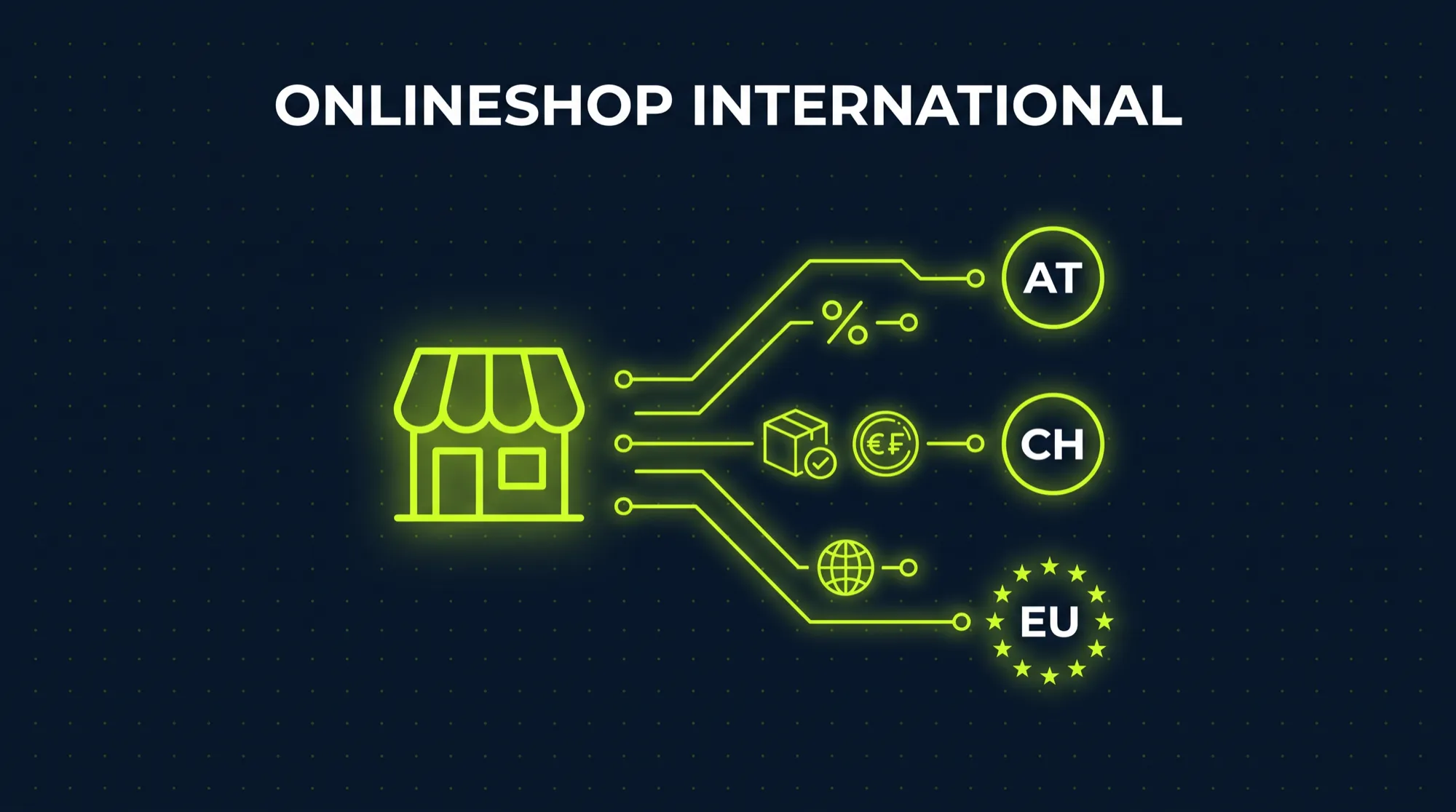
Shopify has structural advantages in international e-commerce: CDN for fast loading times worldwide, native multi-currency support through Shopify Payments, and Shopify Markets for international pricing and tax management. Shopware enables international operations through language shops and is well-positioned for EU markets. Adobe Commerce has the broadest native internationalization functionality. For D2C brands with international growth ambitions, Shopify is the pragmatic choice. What a D2C strategy means for brands in the DACH market is covered in the dedicated article.
When should I switch my shop system?
A shop system migration makes sense when your current e-commerce platform demonstrably blocks your growth strategy: new channels cannot be integrated, B2B requirements cannot be mapped, or development costs for workarounds exceed migration costs. A migration does not make sense because the design is outdated (that is a redesign), because an agency recommended a new system without a requirements analysis, or because a competitor operates on a different platform.
Which e-commerce platform is future-proof for AI commerce?
Shopify currently has the strongest native AI stack: Shopify Magic for content creation, Sidekick as an AI assistant in the admin, and native ChatGPT Catalog integration for AI-powered shopping. Shopware launched an Agentic Commerce sales channel in April 2026 (version 6.7.9). WooCommerce and Magento have no comparable native integration. Decisive, however, is the data quality in the product catalog, not primarily the platform choice.
How long does implementing a new e-commerce platform take?
Shopify with standard theme and app setup: 4 to 12 weeks. Shopify with custom theme and ERP integration: 3 to 6 months. Shopware with medium complexity: 4 to 8 months. Shopware or Magento Enterprise with ERP and custom build: 6 to 18 months. The most common cause of delays is unclear requirements and poor source data quality, not platform complexity itself.
Conclusion: The Decision That Counts
After many e-commerce projects in the DACH market, my honest assessment: most mistakes in platform selection happen not because one system is objectively worse. They happen because the selection process goes to the system level too early and skips the requirements level.
Shopify is for the majority of DACH D2C and B2C merchants the most rational choice today: lowest operating effort, strongest AI integration, best ecosystem for fast growth. And with native ChatGPT Catalog integration, currently the most advantageous starting point for Agentic Commerce.
Shopware is the stronger alternative for B2B-driven models with a DACH focus and their own IT team, with the note: the Shopware Fair Usage Policy 2026 fundamentally changes the cost calculation for shops above €1M GMV on the Community Edition.
WooCommerce has its place for technically minded beginners and content-focused shops that already use WordPress heavily. Not a sensible starting point for shops with growth ambitions above €500K GMV without a strong development team.
Adobe Commerce for genuine enterprise requirements above €5 to €10M annual revenue with complex catalog structures.
E-Commerce Platform Consulting for DACH Merchants
You now have the structured framework for a well-founded e-commerce platform decision. What is still missing: an independent sparring partner who knows your specific situation and delivers a clear recommendation.
I offer a compact consulting session: 60 minutes, structured analysis of your requirements, business model, and IT landscape, clear recommendation with rationale and realistic cost estimate. No partner commissions. No agency interests. Just the recommendation I would give if you were a friend asking me.